

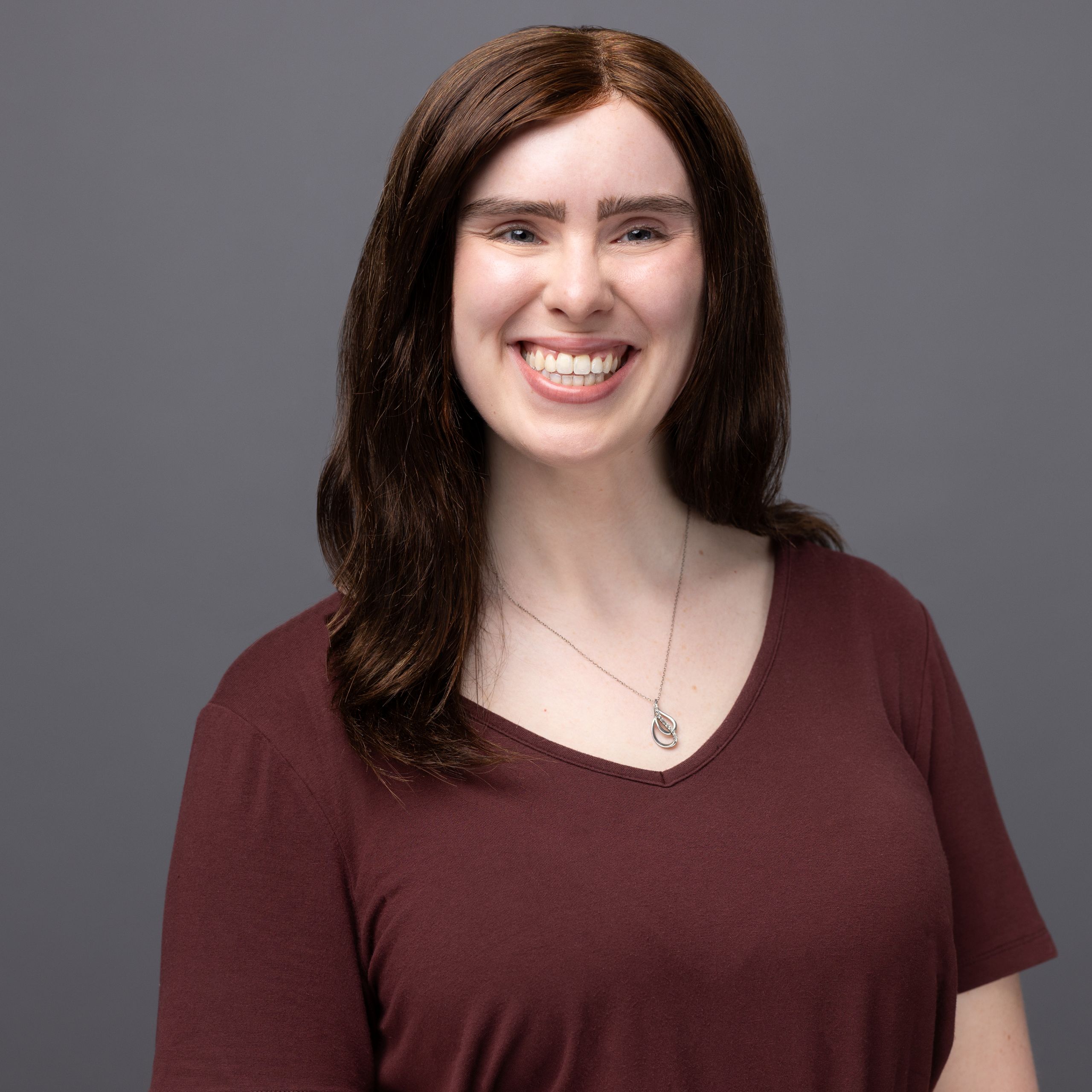
Emily Murphy is a clinical psychology fellow at Old Town Psychology. She provides individual therapy for children, adolescents, and adults, as well as family-based services and parent support. Emily works with clients experiencing anxiety, depression, trauma and bereavement, self-esteem and behavioral concerns, social skills difficulties, and neurodevelopmental differences. She also conducts psychological and cognitive assessments.
Emily received her PsyD in Clinical Psychology, with a specialization in Child, Adolescent, and Family Psychology, from Nova Southeastern University, and completed her predoctoral internship at Southwest Behavioral and Health Services in Phoenix, Arizona. She takes an integrative, evidence-based approach that draws on Cognitive Behavioral Therapy (CBT), Acceptance and Commitment Therapy (ACT), Dialectical Behavior Therapy (DBT), family-based interventions, and trauma-informed care, and incorporates developmentally appropriate, play-based techniques with younger children. Emily works collaboratively with clients to build resilience, develop practical coping skills, and create meaningful, lasting change.
Get to Know Dr. Murphy
I am a clinical psychology fellow at Old Town Psychology. I provide therapy services for children, adolescents, adults, and families, and I am dedicated to cultivating a warm, collaborative, and supportive environment where clients feel heard, understood, and empowered. I believe that a strong therapeutic relationship serves as the foundation for meaningful growth, and I strive to help clients build resilience, develop effective coping strategies, and navigate life’s challenges with confidence. Additionally, I conduct psychological and cognitive assessments to inform diagnosis and treatment recommendations.
I work with clients experiencing anxiety, depression, trauma/bereavement, social skill deficits, self-esteem concerns, behavioral concerns, neurodevelopmental differences, eating disorders, and related medical issues. My clinical approach is collaborative, compassionate, and strengths-based. I take an integrative, evidence-based approach to treatment that is tailored to each client’s unique developmental, emotional, and family needs. I utilize evidence-based treatments, including Cognitive Behavioral Therapy (CBT), Acceptance and Commitment Therapy (ACT), Dialectical Behavior Therapy (DBT), family-based interventions, attachment theory, and trauma-informed care. When working with younger children, I incorporate developmentally appropriate, play-based techniques to help them express emotions, strengthen coping skills, and foster healthy social-emotional development. I am passionate about helping children, adolescents, young adults, and families build resilience, develop practical coping skills, and create meaningful, lasting changes in their lives.
I earned my PsyD in Clinical Psychology with a specialization in Child, Adolescent, and Family Psychology from Nova Southeastern University in Fort Lauderdale, Florida. I completed my predoctoral internship at Southwest Behavioral and Health Services in Phoenix, Arizona, where I provided assessment and psychotherapy services within school- and community-based mental health settings. My professional background also includes working with adolescents diagnosed with eating disorders at Nicklaus Children’s Hospital in Miami, Florida, conducting psychological assessments at a private practice, and providing therapy services for children, adolescents, and families in private and public schools, community mental health centers, and hospital settings.
Publications and Presentations
Murphy, E. & Regmi, K. (2026, April 23). A Lens Into How to Support Neurodiverse and Culturally Diverse Youth: Building Empathy, Inclusive Communication, Culturally Responsive Treatment Planning [Presentation]. Southwest Behavioral & Health Services, Phoenix, AZ.
Kostzer, G., Murphy, E., Valley-Gray, S., & Cash, R. E. (2026, February 13). The Impact of the COVID-19 Pandemic and Method of Instructional Delivery on Responses to Suicidal Risk [Poster presentation]. Arizona Psychology Training Conference, Glendale, AZ.
Saltman, L., Jordan, S., Vas, S., Murphy, E., Hatcher, J., & Morris, J. (2025, August 7-9). The Time is NOW: Preparing for Internship Applications [Presentation]. American Psychological Association Annual Convention, Division 12, Denver, CO.
Murphy, E., Kostzer, G., Hubbard, J., Layne, C., Formoso, D., Valley-Gray, S., & Cash, R. E. (2024, February 14-17). Trauma-Informed Care in the Classroom: How Teachers Are Affected [Presentation]. National Association of School Psychologists Annual Conference, New Orleans, LA.
Kostzer, G., Murphy, E., Valley-Gray, S., & Cash, R. E. (2023, February 7-10). Suicide Assessment and the Imposter Syndrome During the COVID-19 Pandemic [Poster presentation]. National Association of School Psychologists Annual Conference, Denver, CO.
Kostzer, G., Murphy, E., Valley-Gray, S., & Cash, R. E. (2022, November 9-12). The Impact of Learning Modality on Assessment of Suicidal Risk [Poster presentation]. Accepted for the Florida Association of School Psychologists (FASP) Annual Conference, Daytona Beach, FL. This conference was canceled due to a hurricane. As a result, the presentation took place before an audience of students and faculty members at Nova Southeastern University (NSU), Dec. 2nd, 2022.
Murphy, E. & Layne, C. (2022, August 4-6). The Efficacy of Parent-Child Interaction Therapy versus Play Therapy in the Treatment of Oppositional Defiant Disorder Among African American Children [Poster presentation]. American Psychological Association Annual Convention, Division 53, Minneapolis, MN.
Murphy, E., Jack, G., & Northrup, R. (2019, August 15). Psychobiological Development Among Children in Middle Childhood [Presentation]. Undergraduate Research Symposium, University of Delaware, Newark, DE.